Characteristics of 90 degree silicone rubber In Baby and Kitchen items
Advantages:
High Wear Resistance: Silicone rubber with a hardness of 90 Shore A has better wear resistance than lower-hardness silicone rubber, allowing it to withstand friction and physical stress over a long period. This makes it suitable for products that need to be highly durable, such as frequently used kitchen tools or baby teething toys.
Good Shape Retention: High-hardness silicone rubber doesn't deform easily under pressure and can maintain its original shape and functionality. Therefore, this material is ideal for products that require high shape precision and durability, such as kitchen tools or baby utensils that need to retain structural stability over time.
Excellent Mechanical Strength: Higher-hardness silicone rubber has superior mechanical properties, including better tear resistance and compressive strength. It performs well in products requiring higher rigidity and strength, such as cutting boards or sturdy baking molds.
High-Temperature Resistance and Chemical Stability: Like other types of silicone rubber, silicone with 90 Shore A hardness retains excellent heat resistance (withstanding temperatures over 200°C) and chemical stability. It is safe for use in high-temperature environments like ovens and microwaves and won't react with food or detergents.
Disadvantages:
Reduced Flexibility: As hardness increases, the material's flexibility decreases. Silicone rubber with 90 Shore A hardness is relatively rigid and lacks the softness of lower-hardness materials. This may not be suitable for products that require a degree of flexibility (e.g., baby pacifiers or soft baby toys), as it cannot provide a comfortable user experience.
Lower Elasticity: Compared to lower-hardness silicone rubber, higher-hardness materials have less elasticity. This means they are less able to deform when stretched or bent, making them unsuitable for products that require frequent stretching or compression (such as certain baby toys or silicone bowls).
Harder Texture, Unsuitable for Some Baby Products: Silicone rubber with 90 Shore A hardness feels stiff to the touch, making it less suitable for baby products like pacifiers or teething rings, where a softer texture is needed to protect a baby's teeth and gums.
Higher Processing Difficulty: High-hardness silicone rubber may require higher temperatures and pressure during processing, which can increase production difficulty and costs. Additionally, after molding, high-hardness silicone rubber can be harder to demold than lower-hardness materials.
Applicable Scenarios:
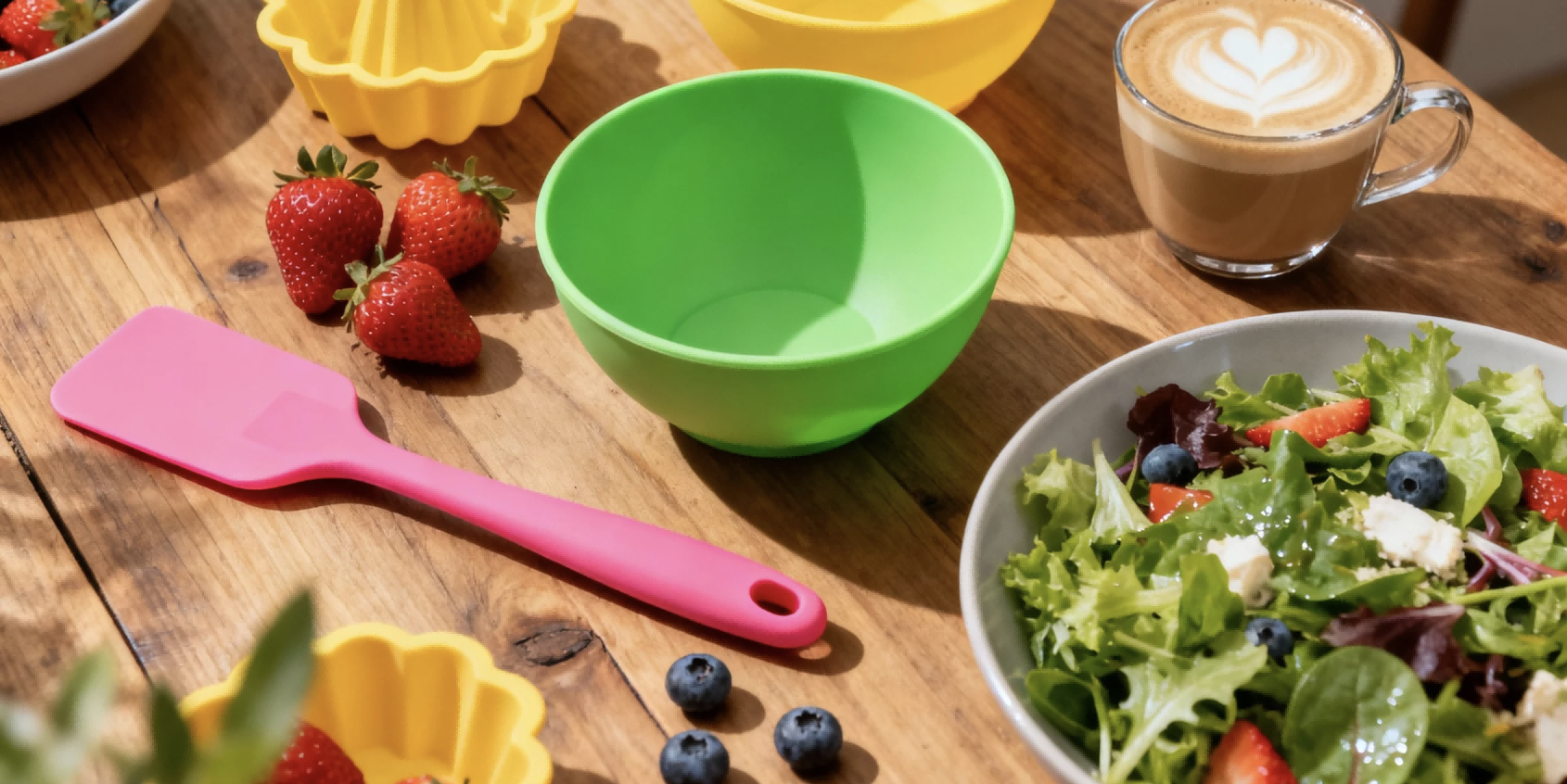
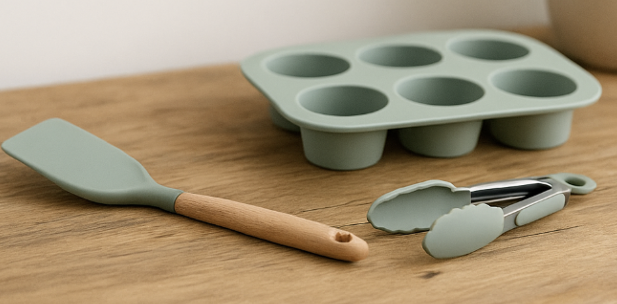
- Kitchen Products: Silicone rubber with 90 Shore A hardness is well-suited for kitchen tools that require high wear resistance and strength, such as cutting boards, baking molds, and spatula handles, which need to maintain their shape and withstand high temperatures over long periods.
- Baby Products: Although this hardness is suitable for producing some high-strength and durable baby products (such as baby utensils or toys), it may not be ideal for products requiring greater softness (such as pacifiers or teething rings).
Summary:
Silicone rubber with a hardness of 90 Shore A has distinct advantages for kitchen and baby products, particularly in scenarios that demand durability, strength, and heat resistance. However, its use is limited in applications where softness and high elasticity are required. Therefore, when choosing this hardness, it is essential to balance the material's properties with the specific product requirements.
Kitchen Cleaning Little Helper - Silicone Drain Mat
Why Choose Silicone Straws?